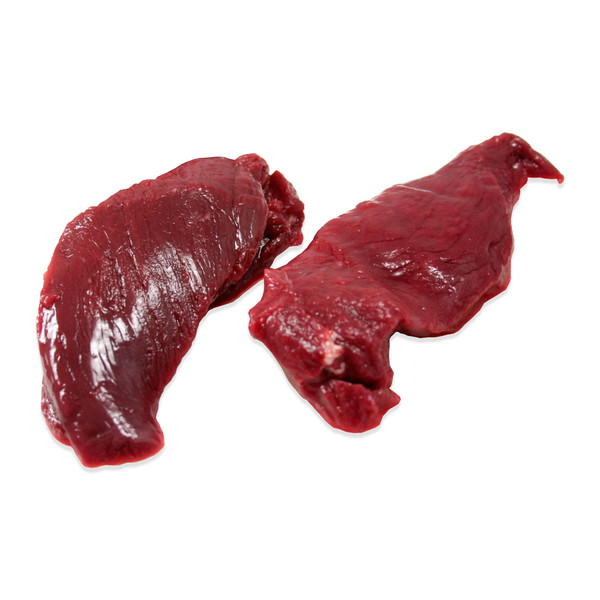
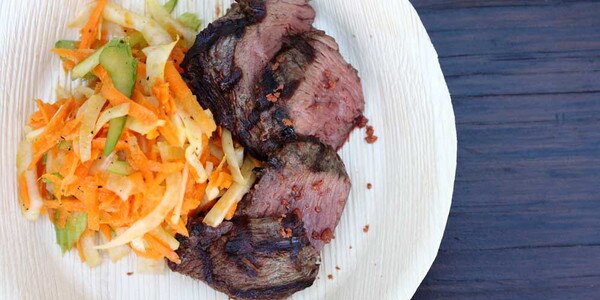
Because they’re so lean, you should brush kangaroo medallions with olive, peanut, or sesame oil before cooking. Though kangaroo meat is perhaps best roasted, medallions can also be sautéed or grilled.
To help ensure a moist, tender result, kangaroo meat can be barded, (wrapped with bacon or pancetta) which will release moisturizing fat as it cooks and impart a little extra smokiness. When the kangaroo is done cooking, the bacon can be served with it or reserved for some other use.
Kangaroo is also good marinated, as long as the marinade’s flavors are kept on the subtle side so the meat's flavor still shines through.
After cooking, kangaroo medallions are best left to rest (covered) for a few minutes before slicing or serving to allow the juices to redistribute.
Flavors that work well with other game meats (particularly venison) are often used with kangaroo. For example: juniper berries, garlic, thyme, bacon, pancetta, berries (try wild huckleberries), red wine, and port.
How to Tell Meat Doneness by Feel
Cutlet & Medallion Recipes
Internal Cooking Temps for Kangaroo:*
Rare – 135°
Medium Rare – 140°-150°
Medium – 140°-145°
Medium Well – 160°
Well Done – 165° and above
* The USDA recommends cooking all wild game meats to an internal temperature of 165 degrees.