|
 |
 |
 |
 |
 |
Sunchokes are often called Jerusalem artichokes or sunroots, but botanically have nothing to do with Jerusalem, artichokes, or roots. Instead they are the edible tuber of a specific variety of sunflower with a nutty, slightly sweet flavor. Some people do feel they have an artichoke-like flavor, which is likely how they got their name. Originally from North America, they were once an important food source for some Native American tribes.
Nutritionally, sunchokes are a good source of Thiamin, Phosphorous, Potassium and Iron. Though their texture and flavor is starchy, they actually don’t contain starch, but instead a different carbohydrate called inulin. The human body converts inulin to fructose rather than glucose, so sunchokes are widely believed to be a better “starch” choice for diabetics.
Applications: Jerusalem artichokes are often roasted whole and then either served that way or mashed with butter and cream into a delicious puree (sunchoke puree recipe – also includes roasting instructions). They can also be steamed, boiled, butter-braised, fried into sunchoke chips or eaten raw in salad. In Europe (particularly France) they are highly regarded as a soup ingredient.
Try pairing sunchokes with dairy (butter, cream, milk), parmigiano reggiano, vinegar, onions, ginger, lemon juice, garlic, nuts, cloves, parsley or mint. They excel as a side dish with almost any roasted meat.
Avoid cooking sunchokes in aluminum or cast iron cookware, as doing so can turn them gray. If serving them cut but uncooked, a brief soak in water mixed with vinegar or lemon juice will keep them from oxidizing.
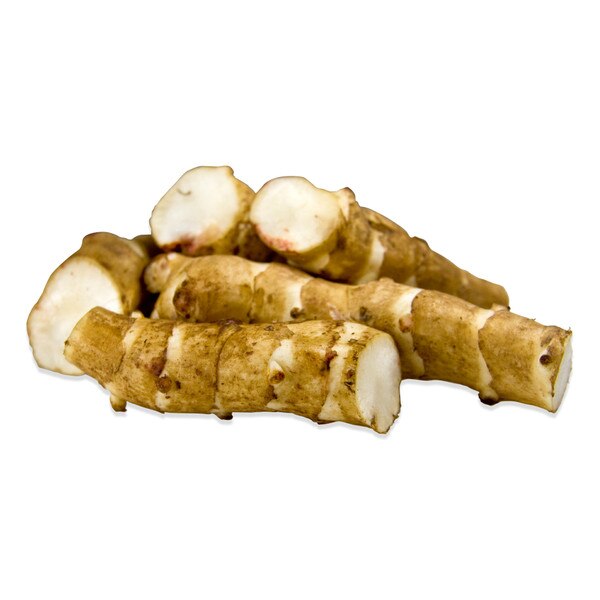
How to Store and Share: Store sunchokes wrapped in paper towels and a zip top bag in your refrigerator crisper for up to a week. Be careful not to put other vegetables on top of them or bang them around in the drawer, as they bruise easily.
Origin: USA
Specifications: Each order of bulk sunchokes is for a ten pound case.
Shipping Method: Fedex Overnight
|
|
 |
 |
|
|
|
|