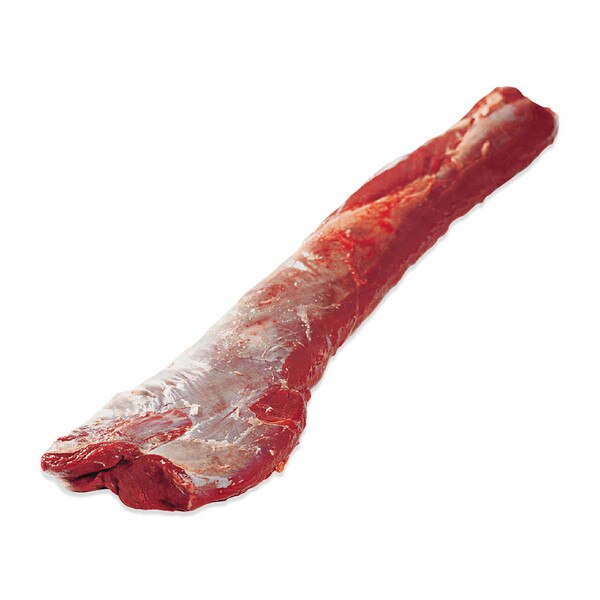
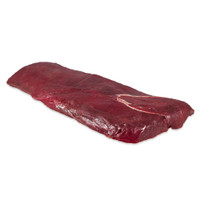
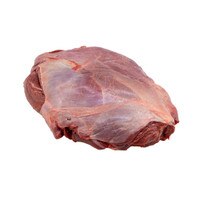
Before cooking venison loins, we recommend using a sharp knife to remove the silverskin from the surface.
Whole venison loins can be grilled, roasted, or broiled. When cooking them whole, use a meat thermometer and cook them until a few degrees short of your desired internal temperature. Then remove them from the heat, cover with foil, and let them rest 8-10 minutes before slicing (the meat should carry-over cook to your target temperature while resting).
Whole venison loins can also be sliced into steaks, noisettes (small steaks) or medallions for pan roasting, sauteing, broiling, or grilling. To help protect its quality, the meat should be rested (covered) for a few minutes after cooking (the larger the cut, the longer the rest). The meat will continue to cook from residual heat while resting, so it’s best to stop cooking it a few degrees away from your target temperature.
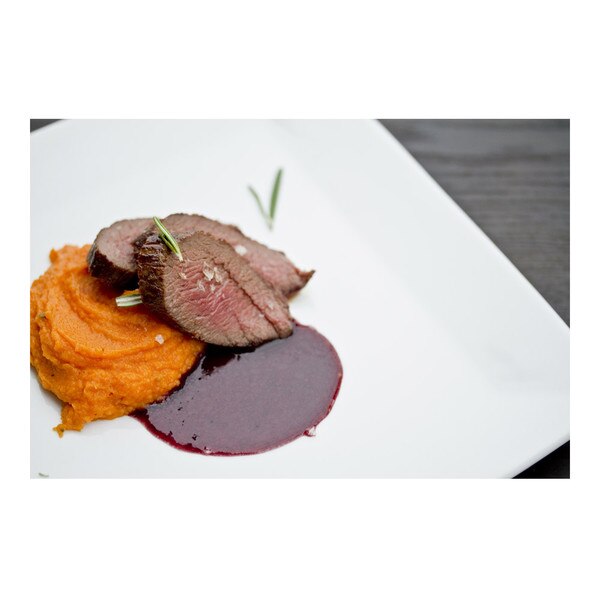
Venison is commonly paired with fruit (apples, pears, or cherries), fresh mushrooms, juniper berries, thyme, rosemary, beef or veal stock, and/or red wine.
Venison Recipes
Recommended Internal Cooking Temperature:
Most chefs feel venison loin cuts are best cooked no further than Medium Rare. However, the USDA recommends cooking all farmed game meats to an internal temperature of 160 degrees.