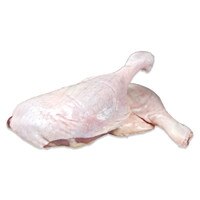
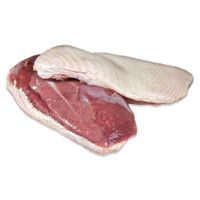
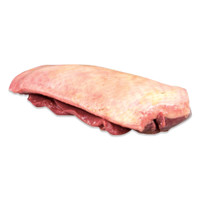
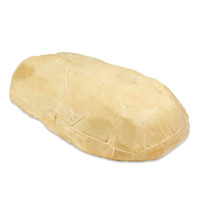
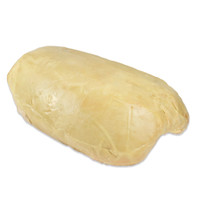
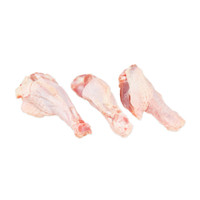
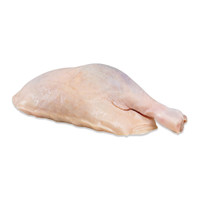
Whole ducks offer a wealth of culinary options. In addition to being roasted whole, they can also be cut into duck breasts and duck legs. Not only does this often save you money over buying pre-portioned duck breasts, but you get the carcass as well, which can be frozen for storage and later used to make delicious duck stock.
Muscovy ducks (aka Barbary ducks) are the most popular duck breed in Europe. They are the leanest of the commonly available domesticated duck breeds, with approximately 30% less fat. In fact, they are lower fat than the common turkey on a pound for pound basis!
Muscovys also offer other benefits when compared to other ducks. They are larger, with more breast meat (up to 50% more) that is stronger flavored than the Pekin (aka Long Island) duck variety that is more commonly consumed in the US.
Store whole muscovy ducks in your freezer until you're ready to use them.
Duck is a very versatile meat and whole ducks are wonderful when roasted, braised, baked, smoked, or cut into legs and breasts. Duck breasts are often pan roasted after their fat has been rendered out. Duck legs have an even stronger flavor. They can also be roasted, but are even better suited to slower cooking methods like braising and confit.
Ingredients often used with duck include apples, ginger, Szechuan peppercorns, lemon juice, soy sauce, wild mushrooms, oranges, rich & fruity red wines, green onions, spicy chilies, honey, cilantro, star anise, thyme and berries. It can be served sweet, savory, tangy, smoked or spicy.
How to Cut Up Poultry - after cutting the meat off of the duck carcass, don't throw the bones away. They can be used to make delicious duck stock - duck stock recipe.
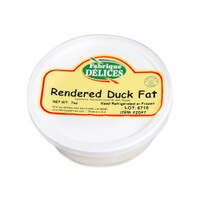
How to Render Duck Fat - for many duck breast recipes, the first step is rendering out the duck fat so that the meat is leaner and the skin crisps. Save the duck fat for use as a cooking fat (instead of oil or butter).