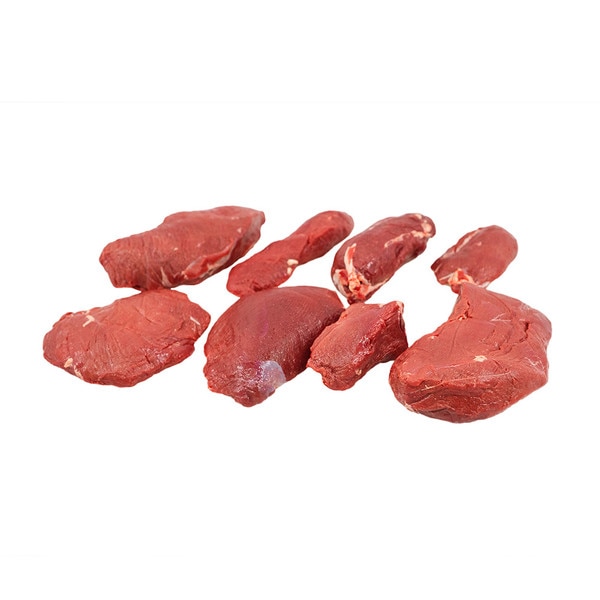
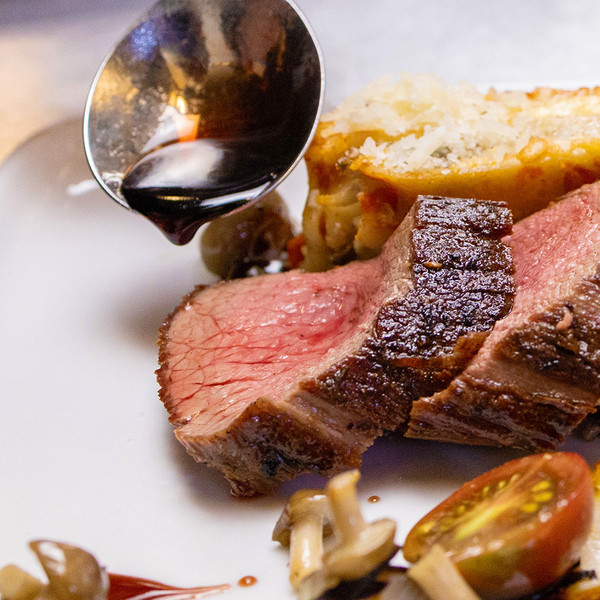
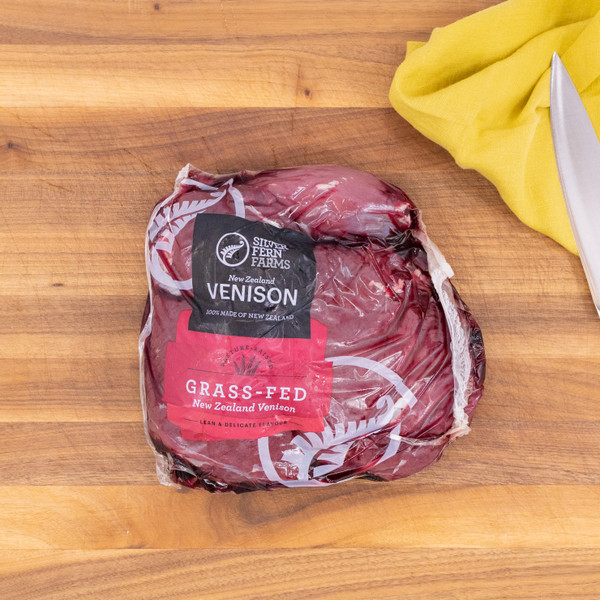
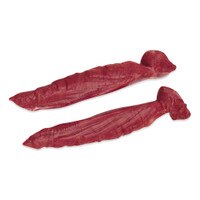
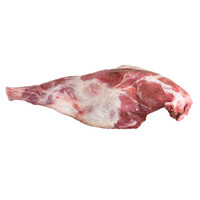
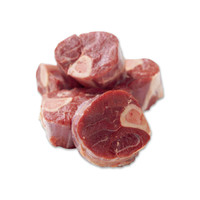
Pieces from the Denver leg can be cooked whole as venison roasts or cut to create medallions, steaks, noisettes, butterflied steaks, mini roasts, stir fry meat, or kebabs.
Venison Recipes
Venison pairs well with fruit flavors like apples, pears, and cherries. Also consider cooking with fresh mushrooms, juniper berries, thyme, rosemary and red wine. Sweet potatoes, polenta, and risotto make good starch pairings.
It is important not to overcook venison. Because it is so low in fat, cooking it too long can make it tough. Most chefs prefer to serve venison either rare or medium-rare.
Before carving or serving any cuts larger than a small medallion, you need to rest the just-cooked meat (covered) to let its juices thicken so they won't run out onto the cutting board. The larger the cut, the more time it will need. In addition, while the meat is resting, it will continue to cook a few degrees, so for your perfect rare, etc, remove it from the heat a couple of degrees early. Plan on resting whole Denver leg muscle roasts for about ten or more minutes, smaller steaks for three to five.
Recommended Internal Cooking Temperatures:*
Denver Leg Muscles as Roasts:
Rare 135°
Medium Rare 136°
Medium 140°
Cut into Venison Steaks:
Rare 104°
Medium Rare 111°
Medium 129°
*The USDA recommends cooking all farmed game meats to an internal temperature of 160 degrees.
Learn more about cooking the Denver Leg Go to the Test Kitchen →