Corned Kobe Beef
PRODUCTS
Meats
Seafood
Produce
Specialty Produce
Heirloom Potatoes
Sea Vegetables
Huckleberries
Microgreens
Edible Flowers
Wild Produce
Galangal Roots
Horseradish
Lotus Roots
Salsify
Sunchokes
Turmeric
Fresh Wasabi
Citrus
Bulk Fresh Herbs
Exotic Fruits
Mushrooms
Chile Peppers
Poultry
Sausage & Charcuterie
Pates, Mousses & Terrines
Truffles
Molded Ice Cream
Palm Leaf Plates
Ravioli
Cheeses
Organic Grains
Rice
Beans & Lentils
Organic Seeds
Sweeteners
Salts
Whole Spices
Oil & Vinegar
Samplers
Special Requests
IN SEASON
SALE
.....................
Bulk Taro Root Online
View Larger Image Email a Friend


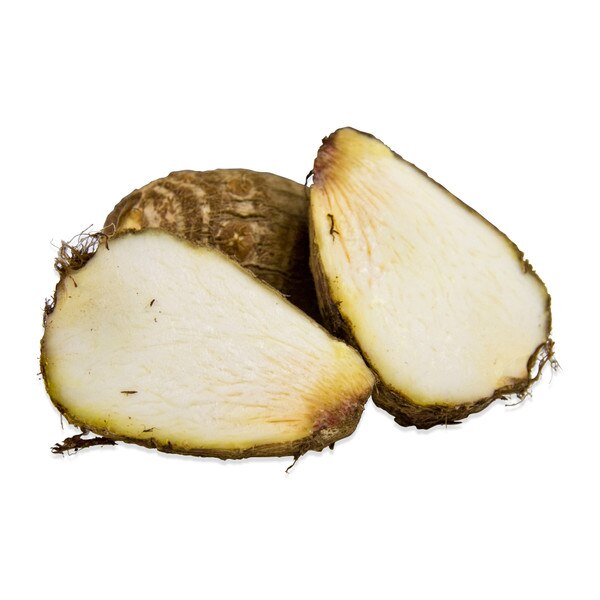
Fresh Taro Root
10lbs

$85.50 for 10lbs (incl S&H)

(Prices Incl S&H)
 
Taro roots (aka cocoyams, calocasia) are a starchy root vegetable (actually a corm) consumed in Asia and South America, as well as several other parts of the world.
 
When cooked its texture is similar to that of a starchy/floury potato, although in some cultures it is whipped until it becomes a smooth paste (as in Hawaiian poi) or ground into powder. It has a starchy, slightly sweet flavor.
 
Note: Taro is not safe to eat raw. Please cook before consuming.
 
Applications: Large taro roots such as these should be peeled before cooking, and can generally be used as you would potatoes. They can be baked, steamed, simmered in milk and mashed, or sliced thin and deep fried to make taro chips (taro chips recipe). They will caramelize more than potatoes during the frying process, so expect them to be darker when done.
 
Because taro corms are consumed all over the world and have such a mellow flavor, they are paired with a wide variety of other ingredients, including cumin, vinegar, black pepper, milk, dashi, coconut milk, ginger, spicy chiles, garlic, mustard, soy sauce, tamarind, shallots, mirin (sweet rice wine), lemon or lemon juice, capers, green olives, lentils, pork, beef, and seafood.
 
Apart from its savory applications, taro starch is also used in desserts and beverages, such as Taiwanese boba tea (aka bubble tea).
 
How to Store and Share: Store taro roots in a cool, dry place for up to a week. If they will be well above 50 degrees outside of the refrigerator, you can store them in the fridge, but doing so can increase their cooking time.
 
Origin: Mexico

Specifications: Each order of bulk taro root is for a ten pound case.

Shipping Method: Fedex Overnight