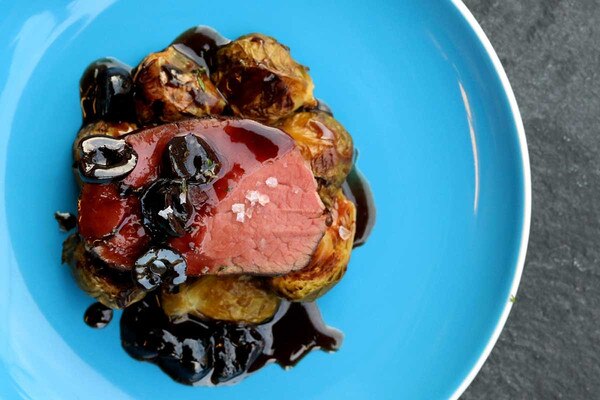
While tenderloin bison steaks are tremendously tender, they’re also less marbled. Pump up the flavor of your steaks with pan-sauces like a shallot red-wine reduction, or rub on herbs and spices before cooking for a savory crust. Bison pairs well with rich, rustic flavors like chile peppers, beer, cumin, red wine, rosemary, and sage.
In general, bison meat can be cooked as you would similar cuts of beef and substituted in beef recipes. The only important consideration is to take its faster cooking rate into account so it doesn’t overcook and dry out. Chefs also typically try to avoid cooking lean game meats past medium rare, as their higher iron content can make them gamier as they get more Well Done.
Because bison is much higher in protein and also a little denser in texture, you’re likely to get full with smaller portions.
Like all meats, it is important to rest bison (covered) after cooking, but before serving, to keep the juices from running out onto the plate. Chefs typically rest steaks for 5-10 minutes. While resting, the meat will continue to cook slightly, so for best results remove it from the heat while it’s still a little below your preferred doneness.
How to Tell Steak Doneness By Feel
Three Techniques for Cooking Steaks
Steak Recipes
Recommended Cooking Temps:
Rare - 135°
Medium Rare - 140°-150°
Medium - 140°-145°
Medium Well - 160°
Well Done - 165° and above